A Beginner's Guide: How to Research a Stock in 5 Steps
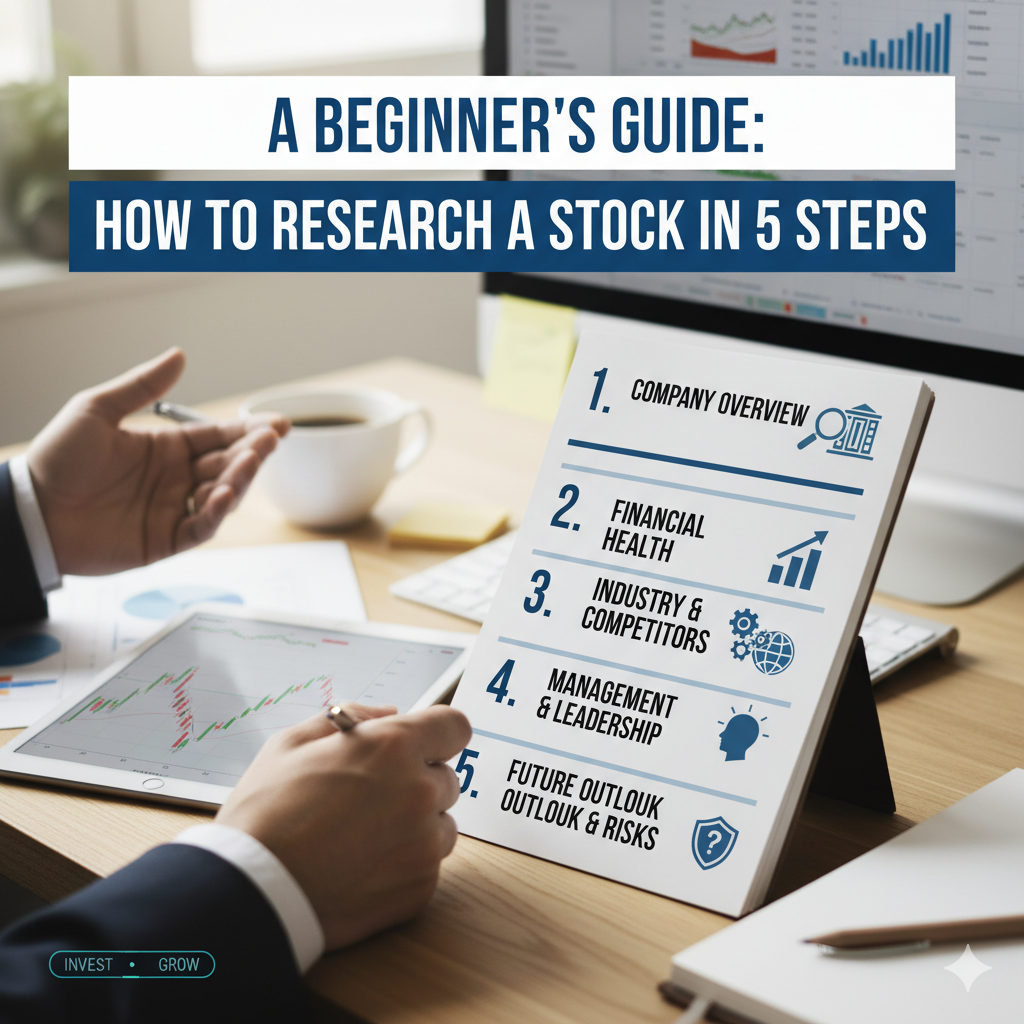
Every successful investor knows that buying a stock isn't like buying a lottery ticket; it's buying a piece of a real business. To make informed decisions, you need to do your homework. This process, known as due diligence, is crucial. Here's a 5-step framework to get you started.
Step 1: Understand the Business
Before you look at a single number on a financial statement, you must answer a fundamental question: How does this company actually make money? If you can't explain its products or services to a friend in a few simple sentences, you may not have the clarity needed to invest confidently. A solid understanding of the business model is the foundation of any good investment.
To build this understanding, start by asking yourself a few practical questions:
• What problem does this company solve? • Who are its main customers? • If it disappeared tomorrow, who would miss it and why?
Answering these will give you an intuitive feel for the company's place in the world and the value it provides.
Step 2: The Financial Health Check
Once you have a grasp of what the company does, it's time to check its "financial vitals." Just like a doctor checks a patient's health, you need to look at a few key numbers to see if the business is financially sound. You don't need to be an accountant, but you should familiarize yourself with these essential metrics:
- Revenue Growth: This shows if the company's sales are increasing over time. Consistent growth is a strong sign that the business is expanding and in demand.
- P/E Ratio (Price-to-Earnings): This tells you how the stock is priced relative to its profits. It helps you understand if you're paying a fair price for the business's earnings.
- Debt: This indicates how much borrowed money the company is using to run its operations. Too much debt can be a significant risk, especially if the business faces hard times.
"Manually finding all these numbers can be time-consuming. Equity Analyzer instantly provides these key metrics in an easy-to-read format for any stock you research."
Step 3: Assess the Moat and Competition
A great business needs a way to defend itself from competitors. In investing, this defense is called a "competitive moat." Think of it like the water-filled ditch surrounding a medieval castle; it protects the castle from invaders. A company's moat protects its long-term profits from rivals.
These moats come in several forms:
• Brand Recognition: A powerful brand, like Coca-Cola's, allows a company to charge more and inspires customer loyalty.
• Network Effects: Some businesses, like Meta (Facebook), become more valuable as more people use them, making it difficult for new competitors to break in.
• Switching Costs: Sometimes it's simply too expensive or inconvenient for customers to switch to a competitor, giving the existing company a sticky customer base.
Step 4: Evaluate Management and Leadership
A company is only as good as the people running it. Strong, honest, and visionary leadership is crucial for long-term success. While it can be tricky to assess people you've never met, you can learn a lot about a company's management team through publicly available information.
A great place to start is by reading the CEO's annual letter to shareholders. These letters often reveal the company's long-term vision, its past successes and failures, and the integrity of its leadership. You can also watch interviews with the CEO to get a better sense of their passion and strategic thinking.
Step 5: Determine a Fair Valuation
Finally, after all your research, you need to consider the price. A very important rule in investing is that a great company can be a bad investment if you overpay for it. Just because a business is fantastic doesn't mean its stock is a good buy at any price.
Valuation is about determining if the stock's current price is reasonable. A simple way for beginners to approach this is through comparison. You can look at a company's valuation metrics (like the P/E ratio we mentioned earlier) and compare them to those of its direct competitors. You can also compare its current valuation to its own historical average to see if it's trading at a premium or a discount.
Conclusion
Researching a stock doesn't require a finance degree, but it does require a structured approach. By taking the time to understand the business, check its financial health, assess its competitive moat, evaluate its leadership, and consider its valuation, you transform yourself from a speculator into a true investor. This five-step process not only helps you pick better companies but also builds the confidence to hold your investments through market ups and downs. Your journey to becoming an informed investor starts with that first step!
Automate Your Research
Manually gathering data takes hours. Equity Analyzer uses AI to generate a full, institutional-grade report on any stock in seconds.
Analyze Your First Stock for Free →